Project Background
The client collaborating on this project is working to develop the key technologies for a new generation of aviation engines, and the high-pressure turbine blades, which are essential components of these engines, face significant challenges. These blades must operate at temperatures exceeding 1,000°C and under centrifugal forces of tens of thousands of revolutions per minute; they also have complex serpentine cooling channels inside them. Traditional precision casting methods not only result in a mold-making cycle that lasts up to 90 days, but also yield a success rate for forming these cooling channels of less than 60%, which fails to meet the client’s urgent requirement to complete the testing of four different generations of blades within 45 days. Several traditional manufacturers have stated that they are unable to produce blades with such complex cooling channels with high precision in a short time, resulting in a pause in the client’s project and a risk of delays in meeting the scheduled deadlines.
Solutions and Project Outcomes
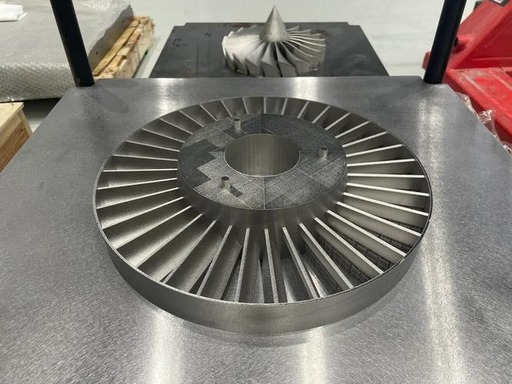
To overcome the challenges associated with delivery, RPS worked closely with its specialized R&D team to abandon traditional casting methods and adopt 3D printing technology using high-temperature resistant nickel-based alloys, thereby offering customers integrated solutions:
1.Topology optimization of flow channels and integrated molding: Topological optimization was applied to the serpentine cooling channels inside the blades, enabling the simultaneous molding of the blade body and these channels. This approach eliminated the weak points that arose from joining channels using traditional methods, while also ensuring that the roughness of the channel interiors met the requirements for effective cooling.
2.Use of high-temperature resistant materials and optimized processing techniques: Nickel-based superalloy powders were used, along with optimized parameters such as laser power and scanning strategies, to achieve high-precision molding of the thin-walled blade structures. The dimensional accuracy was maintained within ±0.02 mm. Additional heat treatment processes were employed to ensure that the mechanical properties of the blades at temperatures of 1100°C met the design specifications.
3.Rapid iteration and verification throughout the entire process: A closed-loop process consisting of design, printing, post-processing, and non-destructive testing was established. High-precision polishing and 3D scanning procedures were also incorporated to ensure consistency and traceability across each generation of blades. The team assigned dedicated personnel to handle customer feedback; any modifications requested were implemented immediately, allowing for rapid iteration within 24 hours.
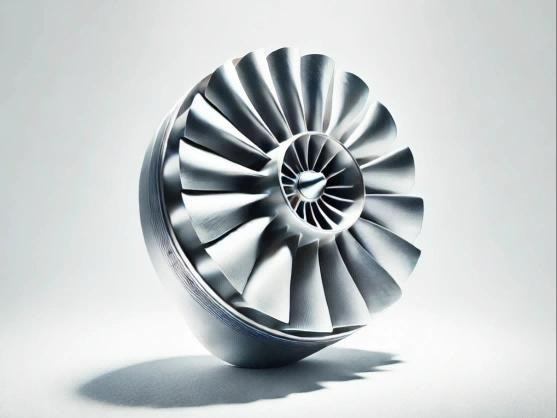
Thanks to its sophisticated manufacturing processes and high efficiency, RPS was able to complete the development and delivery of four generations of blade designs within 35 days, delivering a total of 16 sets of prototypes. All of these prototypes passed all the aviation-grade testing requirements, including tests under high temperature and pressure as well as fatigue cycle tests, with no failures.

In the end, RPS helped its clients shorten the development and testing cycle for turbine blades, reducing the cost of producing each individual component; this ensured that the project could proceed to the next stage as planned. This case clearly demonstrates RPS’s technical expertise and ability to respond quickly in the field of metal 3D printing. Thanks to its professional and efficient services, RPS was able to support the development of aircraft engines for its clients, earning their high recognition and interest in maintaining a long-term partnership with it.