Project Background
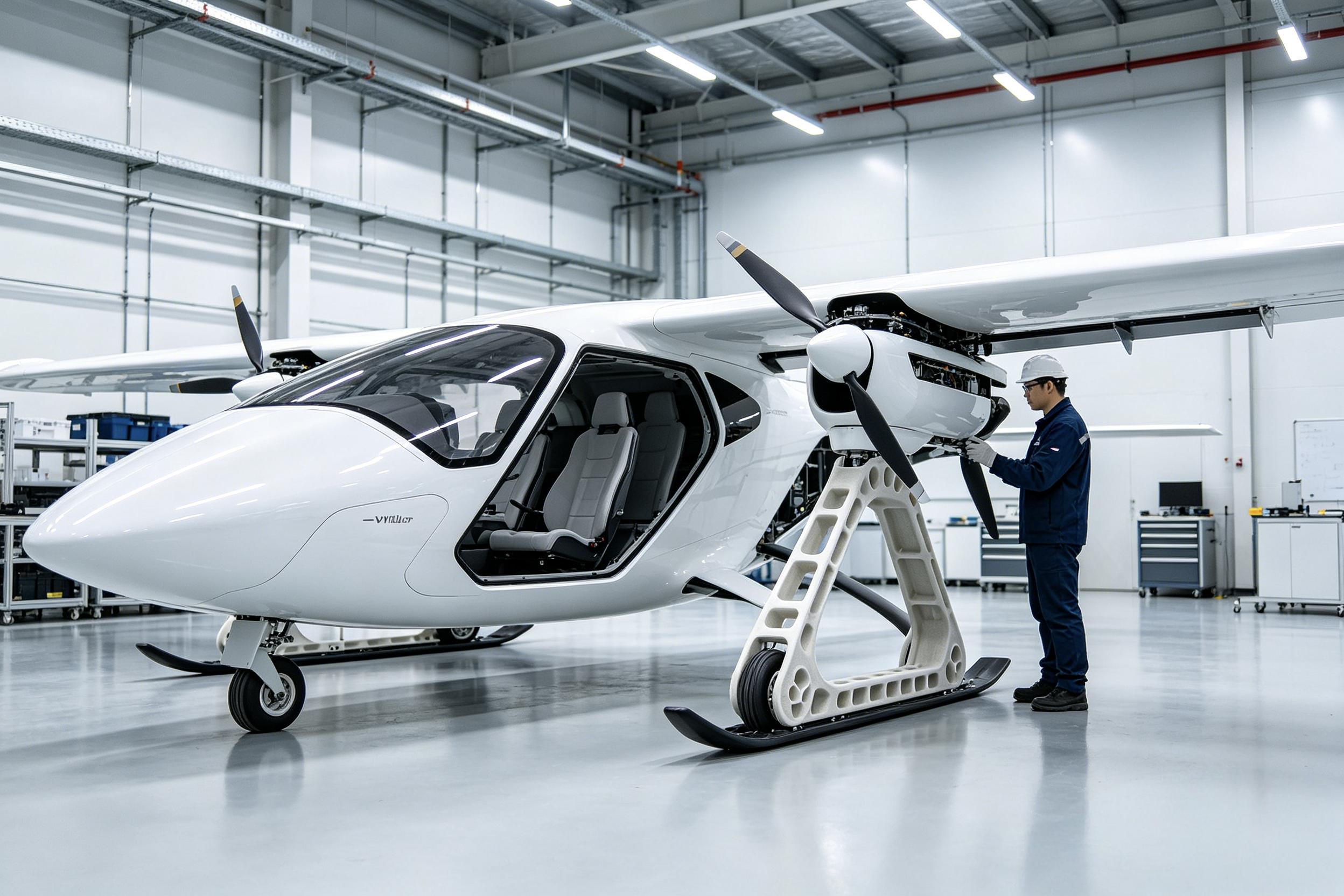
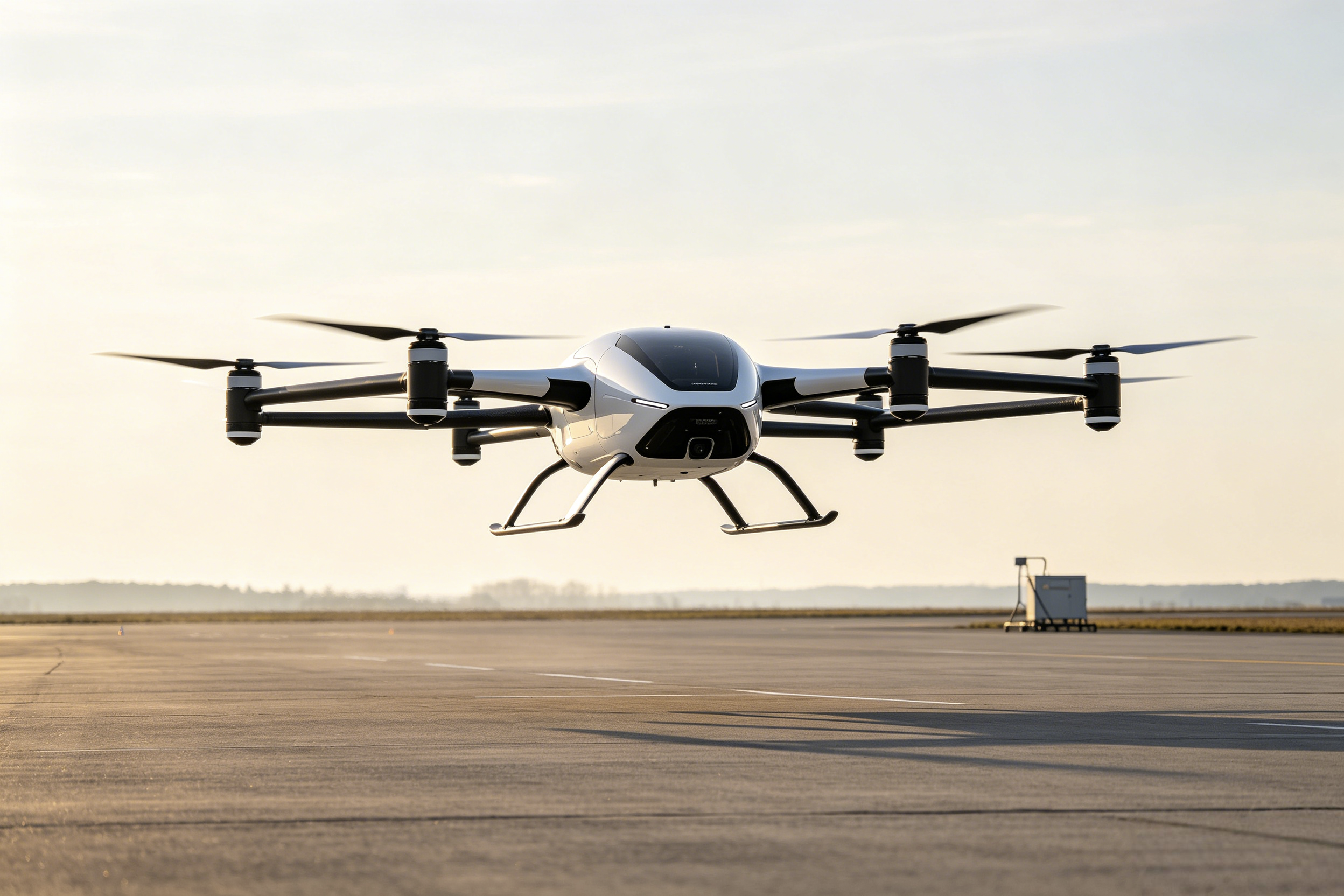
The low-altitude economy in China is developing at a rapid pace, and manned eVTOL aircraft—electric vertical takeoff and landing vehicles—have become the key focus of research and development in the field of general aviation. The newly developed civilian manned eVTOL models require extremely high performance standards from the structural components such as those used for supporting the aircraft’s weight, the connectors for the landing gear, and the core structural elements of the cabin. These components must meet multiple criteria, including light weight, high strength, vibration resistance, tolerance to extreme temperatures, and high safety levels. Traditional forging and machining techniques face significant technical limitations; it is not possible to create complex, hollow structures in a single piece, so more than ten separate parts are needed, which must be manufactured individually before being assembled together. This results in complicated assembly processes, large errors, and numerous gaps between the various structural components, leading to potential issues such as loosening and deformation over time, and thus a very low success rate during test flights. Additionally, traditional manufacturing methods incur high costs for tooling development, with the production cycle for a single version of these components lasting up to 45 days. This delays the ability to develop multiple versions of the components quickly and conduct timely test flights, thereby hindering the progress of aircraft development and certification.
Solutions and Project Outcomes
To address the challenges associated with the development of eVTOL aircraft for our clients, we have abandoned traditional modular manufacturing approaches and, by leveraging advanced 3D printing and additive manufacturing technologies, developed integrated solutions for research and production that meet all the requirements of aircraft development:
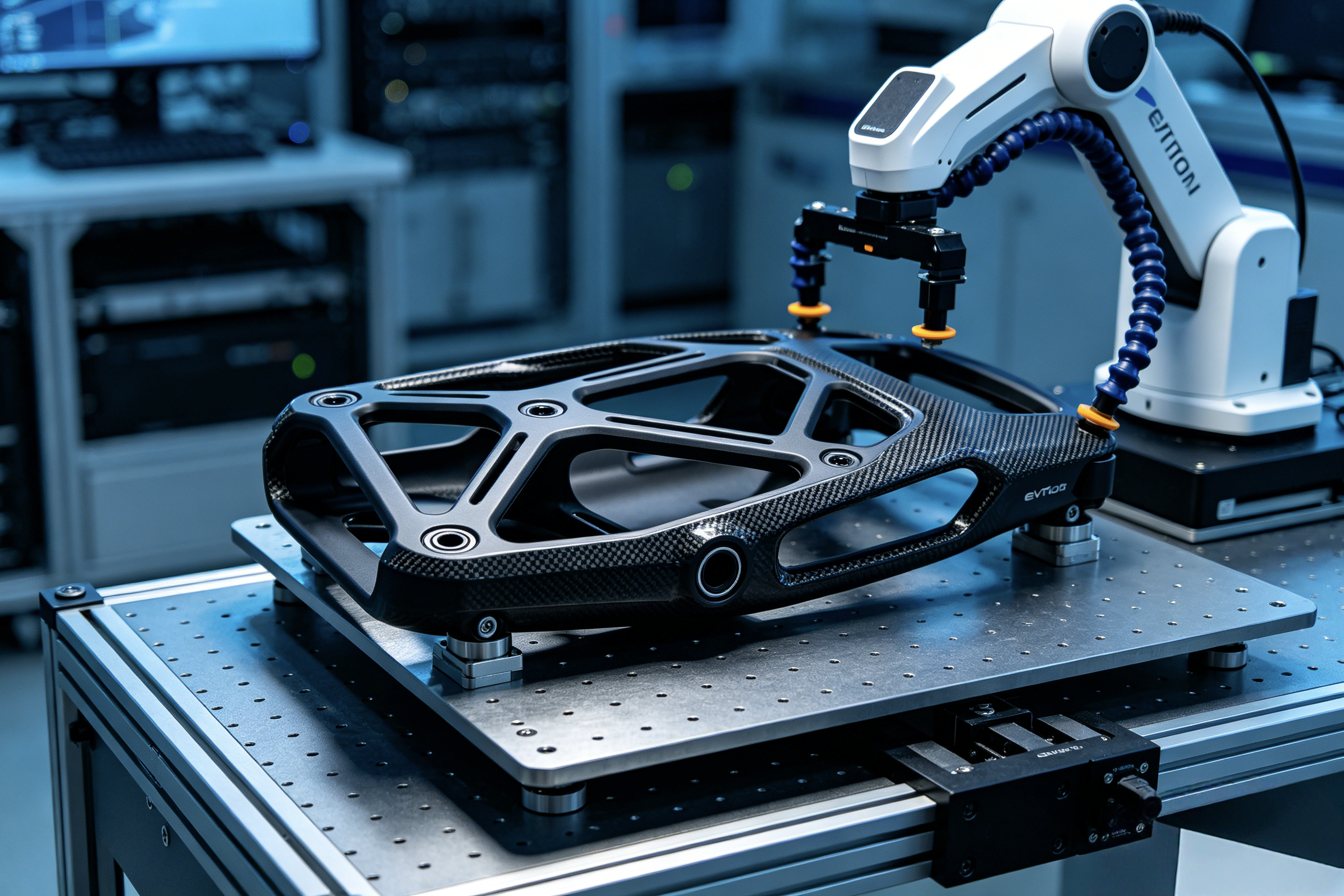
1. Integrated topology optimization design: Topological optimization is applied to key components such as the aircraft’s structural framework and landing gear connections; this allows more than 10 separate parts to be combined into a single unit, eliminating the need for welding or screw assembly. As a result, potential safety issues such as structural loosening, stress concentration, and deformation during flight are eliminated, thereby enhancing the overall stability of the aircraft structure.
2. Use of aviation-grade materials: Given the complex operating conditions faced by aircraft at high altitudes, at high speeds, and under strong airflow, aviation-grade lightweight composite materials and heat-resistant metallic materials are used. These materials offer both extreme light weight and high structural strength, along with excellent resistance to fatigue, corrosion, and extreme temperatures, ensuring compliance with the safety standards required for manned aircraft.
3. Rapid iterative closed-loop production process: A complete closed-loop production chain that includes “structural design, printing and molding, post-processing, non-destructive testing, and mechanical testing” is established, allowing for the rapid creation of complex components with hollow structures, irregular surfaces, and internal reinforcement elements, without the need for mold-making. High-precision polishing, stress reduction, and three-dimensional dimension verification processes are employed to keep the dimensional accuracy of the parts within ±0.02 mm, thereby ensuring the precision of component assembly and flight stability.
4. 24/7 rapid response and iteration: Dedicated technical teams are assigned to work directly with clients, and in response to their feedback regarding structural improvements during flight tests, designs can be altered and prototypes printed quickly within 24 hours, enabling efficient iteration and upgrading of various structural versions.
Through meticulous implementation of the entire process, we were able to deliver a complete set of core structural components within 12 days, which significantly reduces the development time compared to traditional methods. The number of components required for assembly is greatly reduced, as a result of which the flight duration and payload capacity of the aircraft increase, while energy consumption during flight is decreased. All the delivered components passed all necessary safety tests at the aviation standard, including static load testing, high-frequency vibration testing, extreme takeoff and landing simulations, and tests in high and low temperature conditions; they thus met all the requirements for manned flight tests. This enabled our clients’ aircraft to undergo multiple rounds of testing successfully, accelerating the process of obtaining civil aviation certifications and achieving commercial operation. Thanks to our efficient and high-quality services, we have earned the right to maintain long-term partnerships with our clients.