Project Background
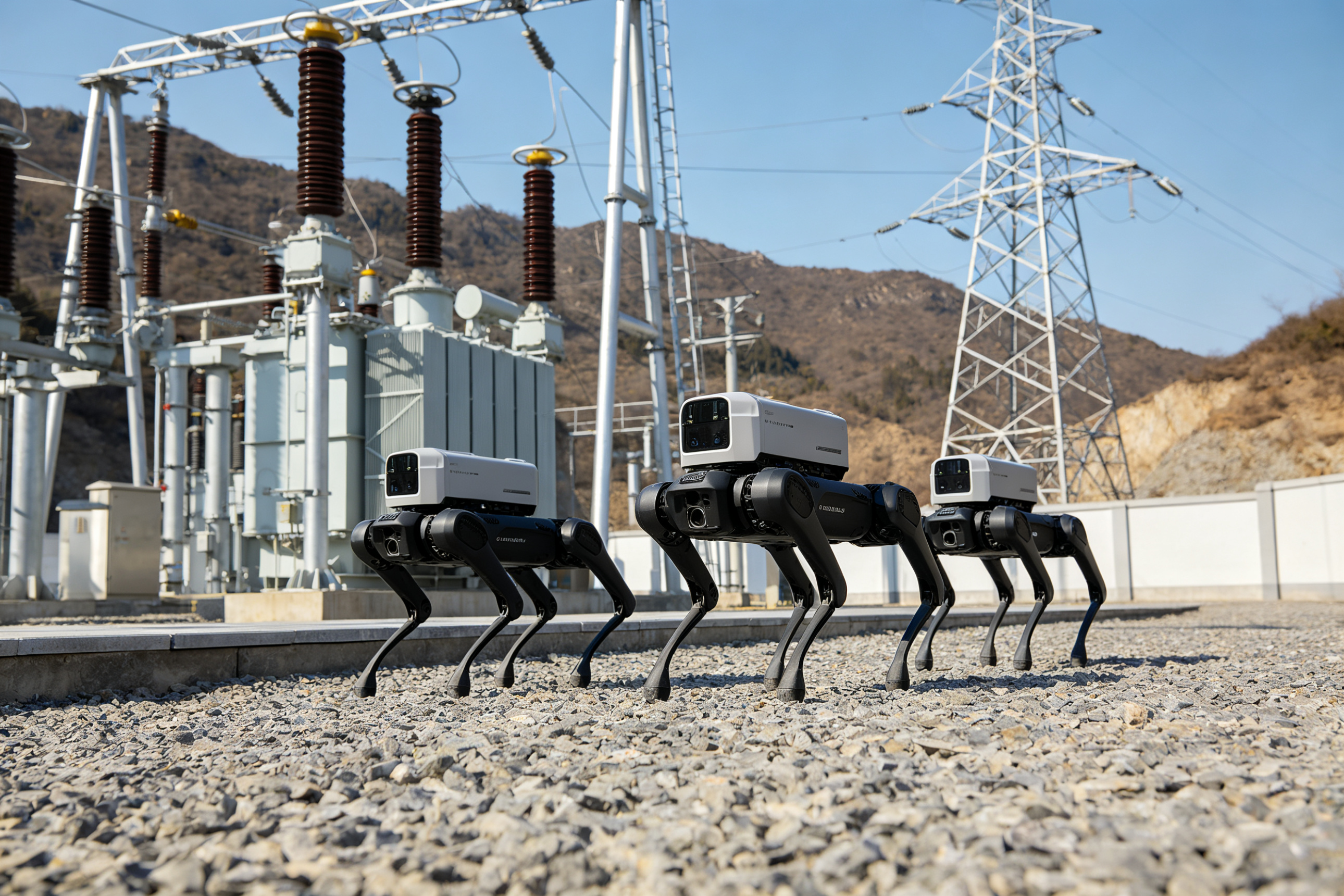
Quadrupedal biomimetic robots are in high demand in areas such as power line inspection, industrial site security, and emergency rescue, thanks to their strong ability to adapt to different terrains and their agility. However, these robots must operate for extended periods in complex outdoor environments, facing challenges such as vibrations, temperature fluctuations, dust, and rain; as a result, there are extremely high requirements regarding the strength, toughness, sealing performance, and weather resistance of their structural components. The shells of quadrupedal robots manufactured using traditional methods suffer from issues such as heavy weight, limited customization options, and difficulties in creating structures with complex shapes. Moreover, each functional upgrade requires the creation of new molds, which prevents rapid adaptation to the customized needs of customers in different industries, thus hindering the expansion of these robots’ applications and their commercialization process.
Solutions and Project Outcomes
In light of the operational characteristics and customized requirements of four-legged biomimetic robots, we utilize 3D printing and additive manufacturing technologies to develop industrial-grade solutions for the structural components of such robots:
1.Biomimetic structural topology optimization: By taking into account the kinematic properties of four-legged robots, we carry out topology optimization of the robot’s body structure and joint protection elements, thereby reducing weight while maintaining structural strength and enhancing the robot’s load-carrying capacity and operational duration.
Selection of high-performance materials: High-strength, impact-resistant engineering materials as well as weather-resistant composite materials are used for the main body of the robot and its external protective components, ensuring resistance to impacts, wear, and extreme temperatures, thus enabling operation in harsh outdoor conditions.
2.Integrated sealing structure design: An integrated sealing shell structure is employed to minimize gaps between various components, improving the robot’s dust and water resistance and protecting its internal electronic components from damage in conditions such as rain or dust.
3.Customized modular mounting platforms: Based on the needs of different industries, modular mounting platforms are designed that allow for quick replacement of devices such as cameras, sensors, and robotic arms, making these robots suitable for various applications such as inspections, security, and rescue operations.
4.Rapid customization and small-batch production: Customers can order robot components with different configurations as needed; small-batch production is possible without the need for mold creation, allowing for rapid response to the requirements of projects in different industries.
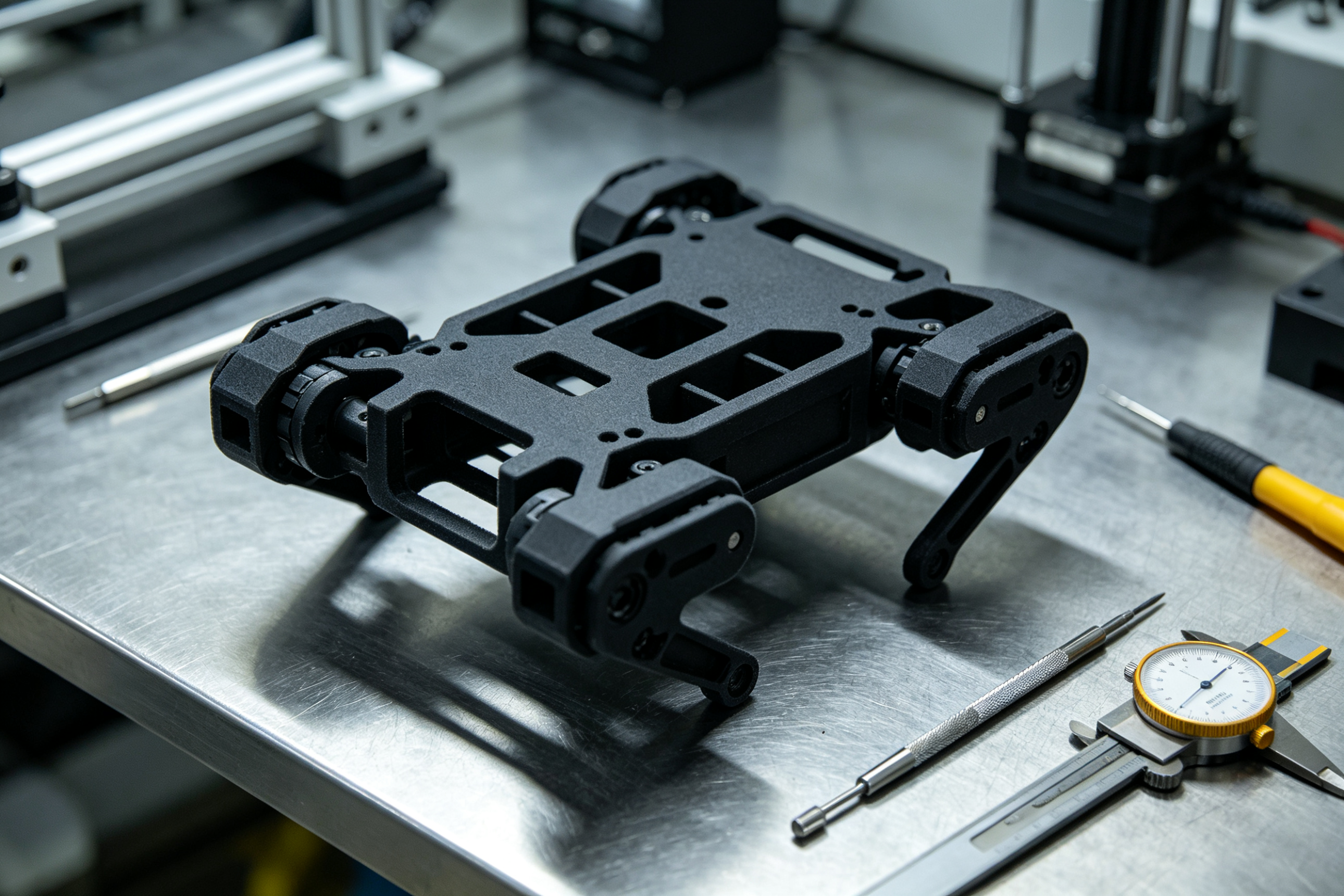
After the project was implemented, the weight of the four-legged robot decreased, its payload capacity increased significantly, and the duration of each operation expanded markedly. The robot’s protection level reached IP65, enabling it to operate reliably in rainy conditions or environments with dust, thus improving its adaptability to various environments. The delivery time for customized components was greatly reduced, which lowered the costs associated with adapting the product to specific customer needs and allowed for rapid response to the requirements of projects in different industries. The product passed strict tests involving drops, vibrations, extreme temperatures, etc., ensuring that its structural reliability and durability met industrial standards. It has been successfully applied in various fields such as power line inspection, factory security, emergency rescue, and scientific research and education, earning bulk orders from industry clients.