Project Background
The customer mainly deals in smart medical digital products such as portable ultrasound devices, intelligent electrocardiogram monitoring equipment, and portable vital sign monitoring devices. These devices have high integration and complex internal structures, with strict requirements for the surface shape of the casing, the installation accuracy of sensors, the internal wiring layout, and the design of the heat dissipation structure. The traditional injection molding mold cycle is over 45 days, and the research and development iteration cost is extremely high, which cannot meet the customer's need for rapid trial and error and rapid verification of multiple versions of appearance and structure in the research and development process. At the same time, the internal structure of the equipment is complex with hollowing, special-shaped heat dissipation channels, and precise positioning installation positions, which cannot be formed through traditional machining integration. They can only be processed separately and assembled. The assembly error is large, and the overall fit is poor, which can easily affect the sensor accuracy and the stability of the equipment operation, seriously slowing down the progress of product research and development, type approval, and market launch.

Solution and Project Outcome
In response to the high precision, high integration, and fast iteration research pain points of smart medical digital devices, we provide a complete 3D printing rapid research and prototyping solution:
1. Whole machine structure adaptation optimization design: Based on the layout of the medical device's circuit board, sensors, batteries, and screens, optimize the surface shape of the casing, internal support columns, positioning slots, hidden wiring channels, and heat dissipation airways. The structure is completely adapted to the assembly logic of the whole machine, without modifying the core circuit and performance of the equipment.
2. Multi-condition medical materials adaptation: According to the equipment usage scenarios, select high-strength, impact-resistant, heat-resistant, sterilizable, flame-retardant, and environmentally friendly special materials to meet the usage conditions of hospitals such as frequent disinfection, long-term standby, and mobile impacts. The casing has a fine texture, anti-aging properties, and is easy to clean.
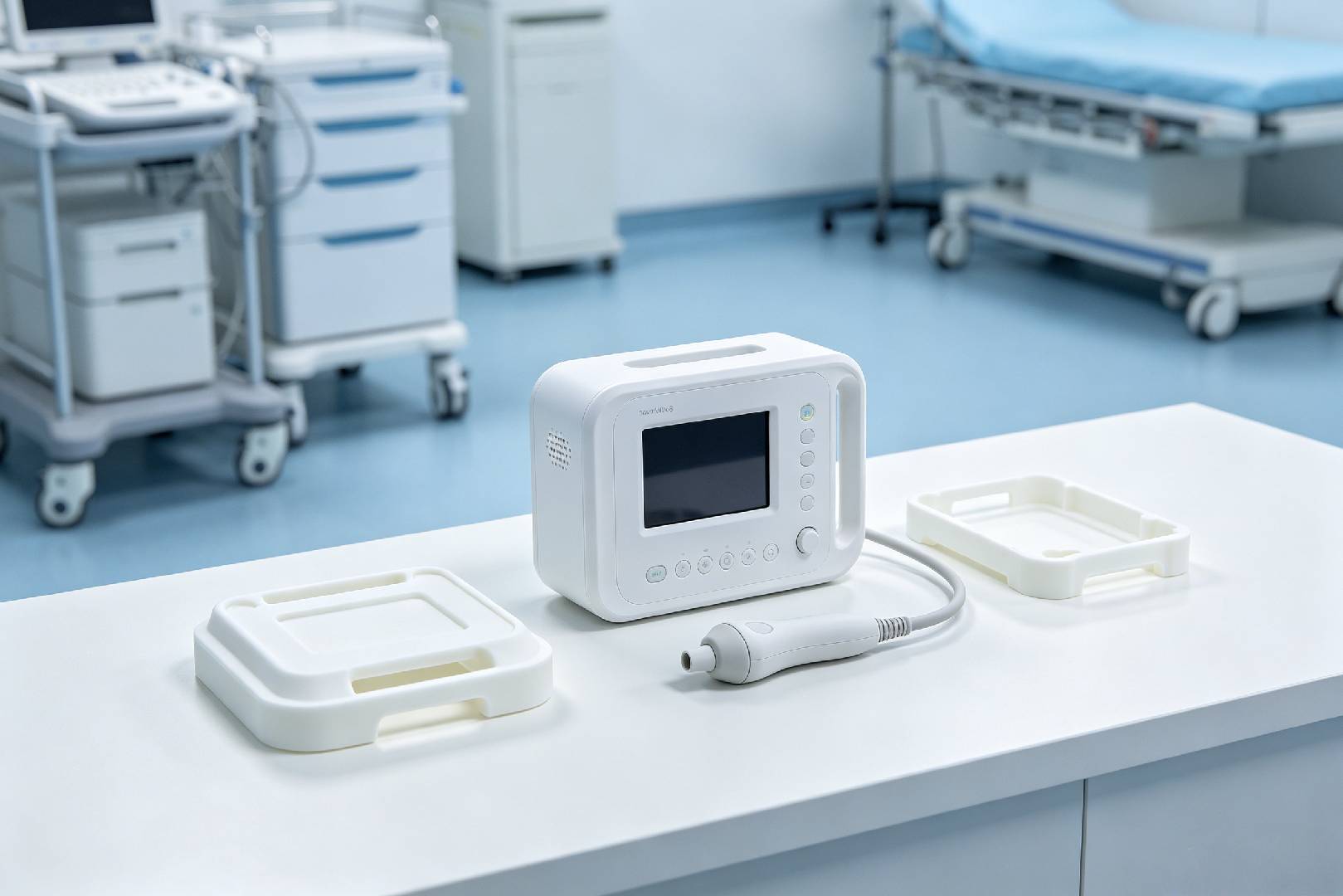
3. Micrometer-level high-precision integrated molding: Use industrial-grade high-precision printing technology to integrate complex curved surfaces, thin-walled structures, precise positioning holes, and other components. The dimensional accuracy is controlled within ±0.02mm, without the need for secondary fine processing, and the assembly is tight, effectively reducing the overall assembly error and ensuring the detection accuracy and operational stability of the medical equipment.
4. Commercial appearance processing and compliance testing: Support a complete set of post-processing such as fine grinding, matte/brilliant surface painting, and silk-screening of LOGOs, achieving the appearance quality of the market launch. At the same time, complete pressure load, high and low temperature, aging, and insulation adaptation tests to meet the research and development verification standards of medical equipment.
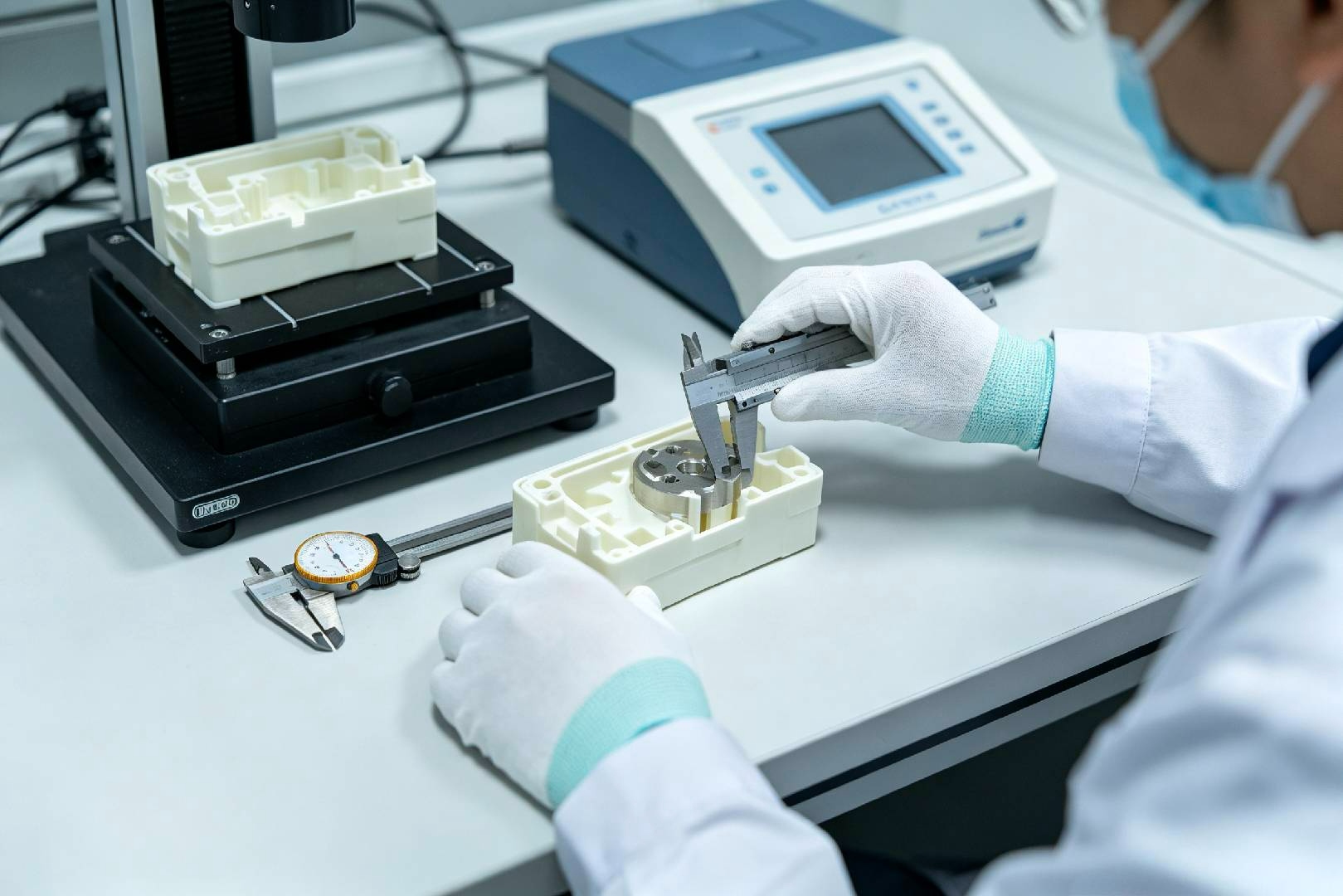
After the project is implemented, the research and development cycle of the medical equipment prototype is significantly shortened, the iteration trial and error cost is significantly reduced, and it helps the customer quickly complete the 3rd generation structure iteration optimization of the whole machine. The assembly accuracy, overall sealing performance, and heat dissipation performance of the equipment have been comprehensively improved. The product successfully passes the prototype verification and early certification tests, significantly shortening the product launch cycle, and helping the customer quickly launch multiple smart medical digital devices to the market, establishing a long-term fixed-point supply partnership.