Project Background
The client focuses on the research and development of intelligent rehabilitation robots and smart rehabilitation medical equipment, which are widely used in rehabilitation departments of various hospitals. Traditional rehabilitation braces and limb fixation accessories mostly have standardized and universal structures, and cannot be personalized to fit the differences in patients' limbs, joint movement angles, and affected areas. This often leads to problems such as skin compression, large gap between the fit, and training slippage, greatly affecting the rehabilitation treatment effect. At the same time, traditional injection molding and machining customization processes have high mold costs and a trial production cycle of over 30 days, which cannot meet the clinical "rapid adaptation and urgent delivery" requirements of hospitals. Complex curved surfaces and ultra-thin fitting irregular structures cannot be formed as a whole and can only be assembled by splicing separately. The structural stability is poor and the yield rate is low, seriously restricting the clinical promotion and iterative upgrade of smart rehabilitation equipment.
Solution and Project Outcome
In line with the high-precision, personalized and high-security usage requirements of smart medical rehabilitation equipment, our company, relying on medical-grade 3D printing technology, provides an integrated rapid customization solution:
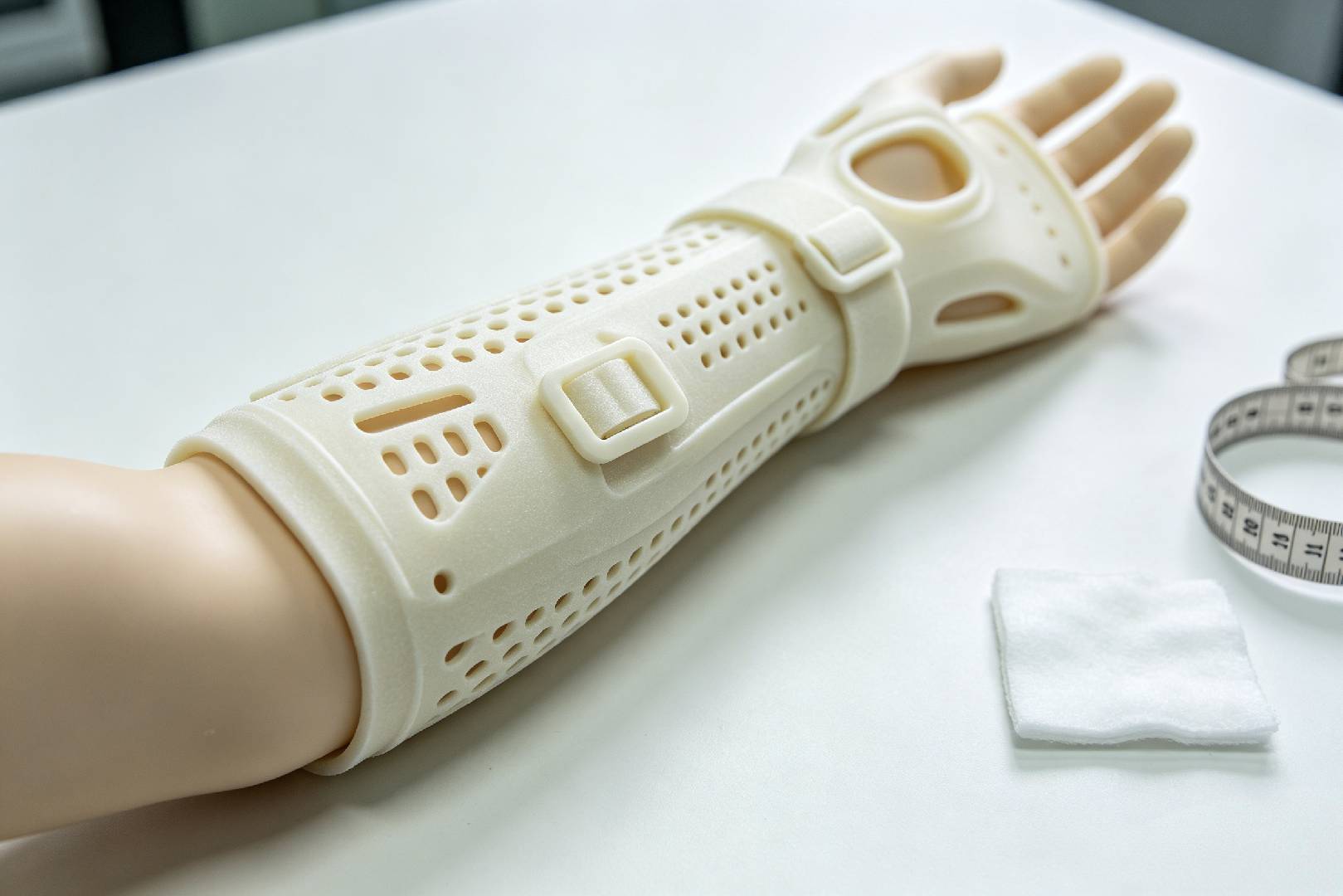
Three-dimensional scanning for personalized topology design: By conducting high-precision three-dimensional scanning to collect patient limb data, the surface structure, force-bearing support points, and ventilation structure of the orthosis are optimized on a one-to-one basis, achieving 1:1 precise fit of the human body and solving problems such as poor compatibility of traditional standard parts, easy detachment, and painful compression.
2. Medical-grade safety material matching: Utilizing medical-grade printing materials that meet biocompatibility standards, are non-toxic and antibacterial, and can come into contact with the human body. These materials have high toughness, are resistant to bending, are lightweight, and support long-term wearing. They can also adapt to disinfection and cleaning conditions and comply with medical device safety standards.
3. Integrated molding of complex structures: Abandoning the traditional processes of separate processing, welding connection, and screw assembly, the supporting structure, adjustment clips, conforming curved surfaces, ventilation grooves, etc. are all printed and formed as a whole. This reduces assembly gaps and loosening risks, significantly enhancing the structural stability and wearing comfort.
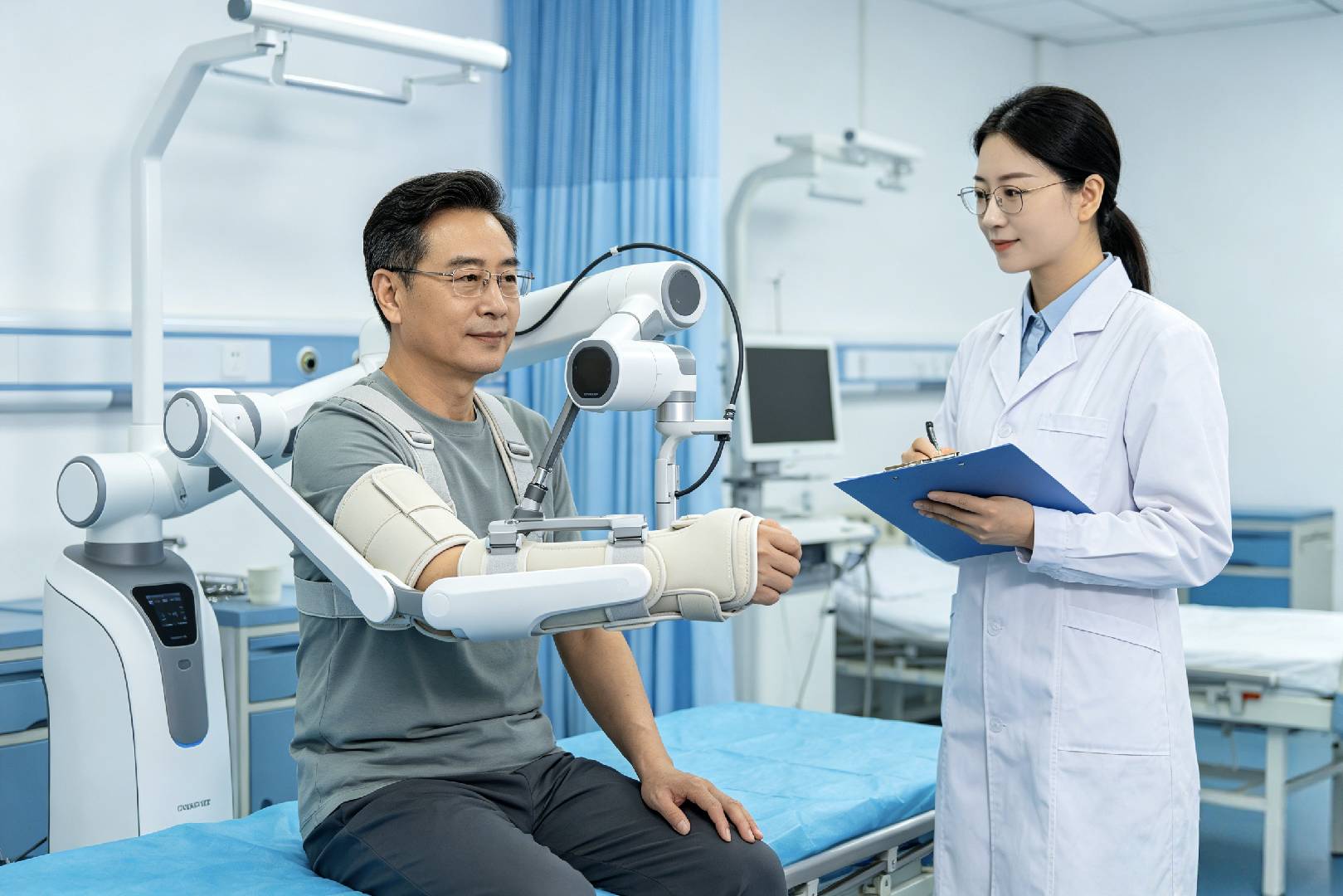
4. Medical-grade post-processing and comprehensive testing: Uniformly refined and polished, with rounded corners and smooth surface treatment, to prevent sharp edges from causing skin abrasions. Equipped with mechanical strength tests, biocompatibility tests, and fatigue tests to ensure the product's safety, durability, and compliance.
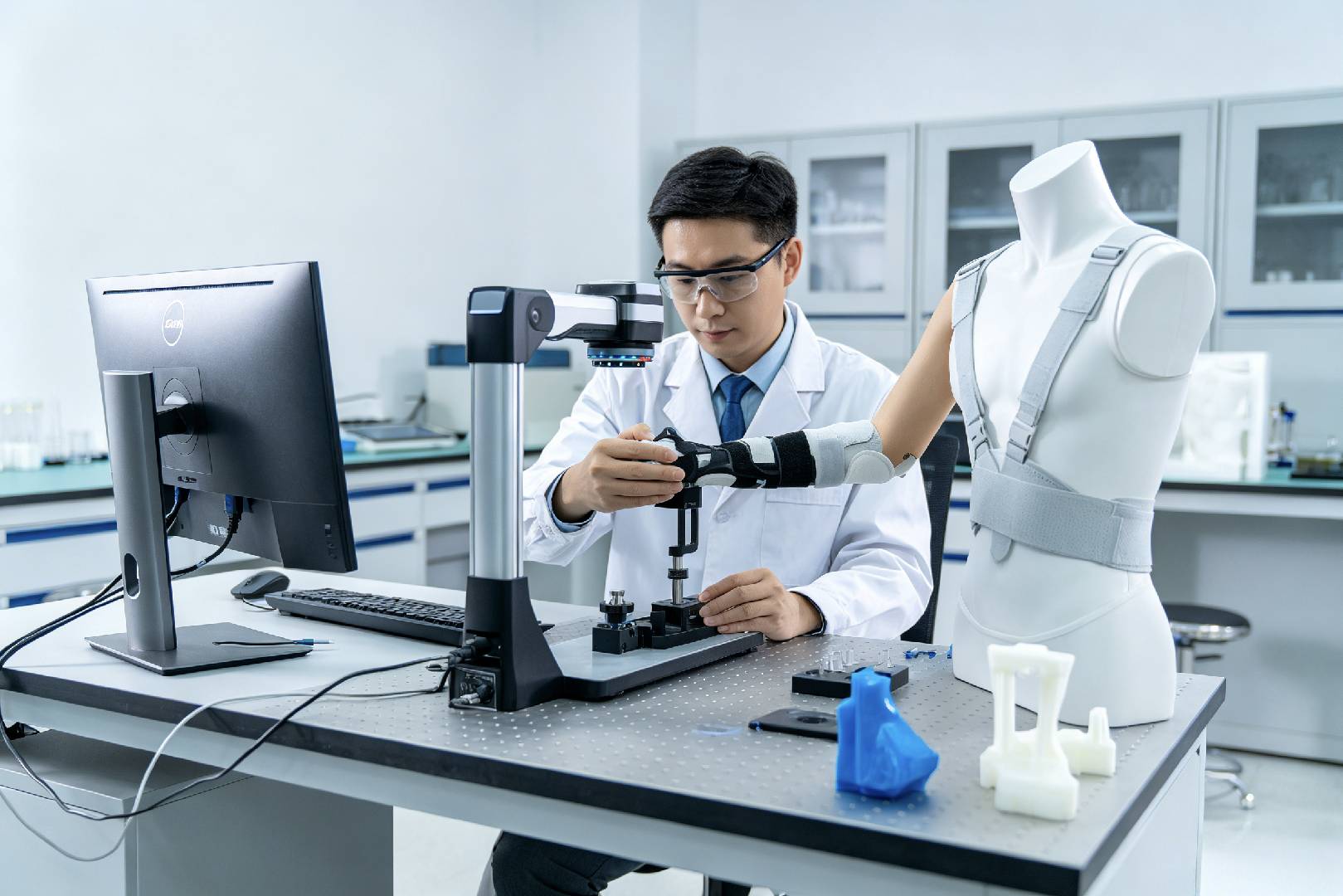
After the project was implemented, the delivery cycle for custom-made rehabilitation equipment was significantly shortened, and the high mold-making costs were completely eliminated. The success rate of limb adaptation for patients was greatly improved, and the wearing fit and stability were significantly optimized, resulting in a remarkable improvement in the rehabilitation training effect. All products passed medical safety tests and were successfully implemented in batch applications in the rehabilitation departments of several tertiary hospitals, helping customers accelerate the iterative upgrade of their intelligent rehabilitation equipment and achieving long-term strategic cooperation.